
AI Fashion Prompts: 15 Best Examples & Pro Tips for Designers
If you have been testing ai generated fashion prompts and getting random results, the fix is usually simple: stop writing vague ideas and start writing like a design brief. The best prompts tell the model what the garment is, how it should look, what materials to use, what mood it should carry, and what must stay consistent. Adobe, OpenAI, and Midjourney all point to the same basics: be specific, describe the scene and subject clearly, include important details, and refine in small steps instead of rewriting everything at once.
AI is useful in fashion because it can speed up mood boards, concept exploration, campaign visuals, and early design direction. Adobe also highlights fashion photography and design as practical use cases, which makes AI a strong tool for designers who need to move from idea to visual fast.
The same rules work for fashion ai prompts, editorial concepts, technical flats, and product mockups: define the goal first, then describe the garment, then lock the details that matter most. Good ai fashion prompts usually name the silhouette, fabric, color palette, construction details, styling mood, and output type.
The simple prompt formula professionals use
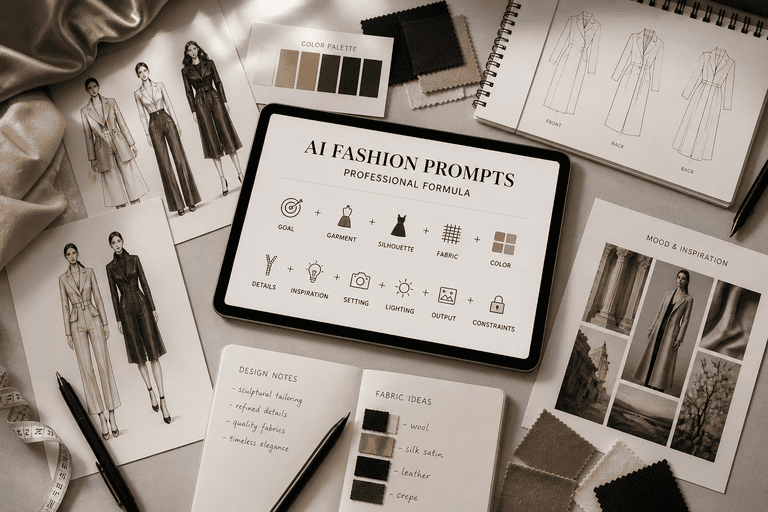
For ai prompts for clothing design, use this structure:
Goal + garment type + silhouette + fabric/material + color palette + construction details + inspiration + setting/background + lighting + output style + constraints
Example:
“Luxury womenswear concept, tailored wool blazer dress, sharp shoulders, cinched waist, charcoal and ivory palette, satin lapels, hidden pockets, inspired by 1990s minimalism, clean studio background, soft directional lighting, fashion illustration, no extra accessories, full-body front view.”
This follows the same pattern recommended across the major guides: set the scene, define the subject, add key details, and state clear constraints.
Prompt-building table
| Design goal | What to include | Useful add-ons | Common mistake |
|---|---|---|---|
| Mood board | aesthetic, era, palette, textures, references | “editorial collage”, “fabric swatches”, “luxury branding” | asking for “fashion mood board” only |
| Garment concept | garment type, silhouette, fabric, trims, color | “front view”, “full-body”, “studio lighting” | no construction details |
| Capsule collection | number of looks, shared palette, target customer, season | “cohesive collection”, “consistent styling”, “merchandising ready” | prompts that make every look unrelated |
| Technical sketch | front/back view, seams, closures, pockets, hems | “flat technical drawing”, “clean linework”, “white background” | asking for realism instead of a flat |
| Textile or print | motif, repeat style, scale, colors, fabric use | “seamless repeat”, “for silk twill”, “high detail” | forgetting scale or repeat direction |
| Campaign image | model, outfit, location, pose, lighting, lens feel | “luxury editorial”, “high contrast”, “magazine cover quality” | no brand mood or art direction |
| E-commerce mockup | plain background, front angle, product clarity | “ghost mannequin”, “catalog lighting”, “true fabric texture” | too much atmosphere, not enough product detail |
| Design revision | what stays, what changes | “preserve silhouette”, “change only fabric and color” | changing too many variables at once |
15 Best Professional Prompts for Designers
1. Luxury runway collection prompt
Prompt:
Create a high-fashion runway lineup for a luxury autumn/winter womenswear collection. Show 6 full-body looks presented side by side with consistent model proportions and cohesive styling. Design language: sculptural tailoring, elongated silhouettes, sharp shoulders, controlled volume, strong waist emphasis. Materials: double-face wool, matte leather, liquid satin, heavy crepe. Color palette: black, oxblood, deep forest, stone. Include refined construction details such as hidden closures, precise darts, structured lapels, and engineered hems. Paris runway mood, dramatic but clean lighting, polished fashion photography, editorial realism, no audience distraction, no text, no logos, consistent collection identity.
2. Commercial luxury ready-to-wear prompt
Prompt:
Design a commercially viable premium ready-to-wear womenswear look for a contemporary luxury brand. Garment focus: midi wrap dress with soft shoulder structure, waist definition, fluid skirt movement, and subtle volume sleeves. Fabric: printed silk-viscose blend with realistic drape and natural fold behavior. Palette: midnight navy base with ivory botanical print. Style it for upscale online retail presentation. Clean studio background, soft shadow under the hem, front three-quarter view, photorealistic product-fashion hybrid, garment must look wearable, elegant, and production-aware, no fantasy elements, no costume styling.
3. Couture eveningwear prompt
Prompt:
Create a couture evening gown concept for a red-carpet presentation. Floor-length silhouette with architectural bodice, sculpted neckline, fitted waist, and dramatic flowing train. Material combination: silk faille, sheer organza overlays, hand-applied crystal embellishment, tonal beadwork concentrated at the bodice fading into the skirt. Color palette: deep sapphire with black undertones. Show realistic couture craftsmanship, refined seam placement, balance between structure and softness, cinematic spotlighting, museum-grade luxury, front-facing model in elegant static pose, editorial high fashion image, no exaggerated fantasy anatomy.
4. Fashion illustration prompt for design boards
Prompt:
Generate a professional fashion illustration sheet for a premium womenswear concept. Show 4 full-body figures in frontal and slight three-quarter poses. Illustration style: clean marker-and-pencil luxury fashion rendering with controlled linework, refined shading, visible fabric weight, realistic garment layering. Collection direction: quiet luxury, fluid tailoring, neutral tones, intelligent simplicity. Include garments such as a fluid trench, elongated vest, relaxed tailored trouser, and soft knit column dress. White background, presentation-board quality, no random decorative elements, no messy sketchbook effect, cohesive proportions across all figures.
5. Technical flat prompt
Prompt:
Create a professional technical flat of a cropped utility jacket for apparel development. Show front and back views with clean black linework on a white background. Include panel seams, topstitching, zipper closure, two oversized flap pockets, adjustable cuff tabs, elasticated hem, back yoke, and stand collar. The drawing should look suitable for a tech pack: clean, balanced, proportionally correct, production-ready, no model, no shading, no artistic effects, no perspective distortion.
6. Capsule collection prompt
Prompt:
Design a 5-look capsule collection for spring/summer aimed at modern professional women aged 30 to 45. The collection should feel elevated, versatile, and retail-ready. Include one lightweight outer layer, one day dress, one knit look, one tailored set, and one evening transition piece. Shared visual identity: relaxed precision, breathable luxury fabrics, understated sophistication. Materials: linen blend suiting, silk twill, fine gauge knit, washed cotton poplin. Palette: chalk, sand, olive, espresso. Show all looks in one clean lineup with consistent styling, realistic proportion, and clear collection cohesion.
7. Editorial campaign prompt
Prompt:
Create a luxury fashion editorial image for a campaign launch. A model wears a sharply tailored ivory trouser suit with a fluid silk blouse partially visible under the jacket. The pose is calm, self-assured, and architectural. The setting is a minimalist concrete interior with large shadow shapes from late afternoon sun. Use directional natural light, high-end magazine composition, 85mm lens feel, realistic skin texture, premium fabric texture, soft contrast, restrained color grading. The image should feel like a modern European fashion campaign, sophisticated and believable, no heavy retouching, no extra props.
8. Lookbook prompt
Prompt:
Generate a premium fashion lookbook page featuring one full-body look and two close-up detail crops. Garment: oversized tailored blazer, fine rib knit top, high-waisted pleated trouser, pointed leather shoe. Styling direction: minimalist urban luxury. Show fabric detail, seam precision, silhouette balance, and proportion. Neutral off-white studio backdrop, soft controlled lighting, high-end printed lookbook feel, refined editorial layout style, no visible page text, no brand logos, no background clutter.
9. Streetwear brand prompt
Prompt:
Design a premium streetwear unisex fashion concept for a niche contemporary label. Include an oversized washed hoodie, technical cargo trousers, layered heavy jersey tee, and structured outer shell. Emphasize garment engineering: utility pockets, articulated knees, reinforced seams, oversized but intentional proportion, realistic heavy cotton texture, matte nylon contrast panels. Palette: washed black, graphite, muted cobalt. Urban editorial setting, overcast city lighting, full-body front pose, realistic styling, not cartoonish, not futuristic costume.
10. Knitwear prompt
Prompt:
Create a luxury knitwear design concept for autumn. Garment focus: oversized funnel-neck sweater dress with dropped shoulders, elongated sleeves, and engineered rib transitions at cuff, hem, and side panel. Yarn appearance should feel premium and tactile, with realistic knit density and subtle softness. Color palette: oatmeal, soft taupe, and winter cream. Presentation style: elevated fashion product image with garment detail visible, studio-lit, front three-quarter view, clean background, no extra accessories, no print, no visual noise.
11. Denim prompt
Prompt:
Design a premium denim fashion concept for a contemporary womenswear brand. Show a full look featuring a structured denim jacket and wide-leg high-rise jeans. Include visible but refined construction details: contrast stitching, branded metal hardware style without logos, paneled shaping, clean waistband finish, subtle wash variation, authentic denim texture with natural wear at stress points. Styling should feel fashion-forward but sellable. Editorial studio image, cool neutral backdrop, realistic drape and fit, no street clutter, no distressed excess.
12. Resortwear prompt
Prompt:
Create a luxury resortwear concept image featuring a flowing halter-neck maxi dress with open back, fluid drape, high side slit, and handcrafted trim detail. Material should appear as lightweight silk-cotton voile with sunlit translucency and natural movement. Palette: sea salt white, pale mineral blue, faded coral accents. Setting: Mediterranean stone terrace overlooking water, warm natural sunlight, soft breeze, upscale travel editorial style. The garment must remain the hero, with believable fashion proportions, realistic fabric movement, and no costume excess.
13. Activewear prompt
Prompt:
Design a premium womenswear active capsule concept for yoga and studio training. Include matching longline sports bra, high-waist compressive leggings, lightweight wrap layer, and sculpted unitard option. Materials should read as technical matte stretch jersey with subtle compression mapping, bonded seams, contour paneling, and high-end performance finish. Palette: soft clay, stone, espresso, muted sage. Presentation: clean wellness-luxury campaign aesthetic, minimal interior setting, diffused daylight, realistic body posture, garment fit must look functional and believable.
14. Print and textile prompt
Prompt:
Create a sophisticated seamless textile print for luxury womenswear. Design language: abstract botanical forms mixed with restrained geometric framing. Intended use: silk blouse and dress collection. Keep the repeat elegant and balanced, with premium spacing, clean rhythm, and refined scale. Palette: ivory, espresso, olive, and muted gold. The final image should look like a professional textile development concept, flat presentation, high detail, no random motifs, no childish illustration style, seamless repeat logic visible.
15. Virtual try-on / garment swap prompt
Prompt:
Keep the model’s face, body shape, pose, hair, expression, lighting direction, and camera framing exactly the same. Change only the outfit to a luxury camel wool wrap coat layered over a cream fine-knit dress with knee-high leather boots. The garments must fit naturally on the body with realistic drape, sleeve tension, hem fall, folds, occlusion, and shadow interaction. Match the fabric texture and light temperature to the original image so the clothing looks genuinely worn, not pasted on. No changes to background, no extra accessories, no anatomy distortion.
Pro upgrade table
| Use case | Weak version | Professional version |
|---|---|---|
| Runway concept | “high fashion dress on runway” | define collection size, silhouette system, materials, palette, construction, lighting, and lineup consistency |
| Product image | “beautiful dress in studio” | define garment type, fabric behavior, commercial purpose, framing, background, and realism constraints |
| Editorial | “fashion photo in luxury style” | define pose, camera feel, light source, location mood, garment details, and retouching level |
| Technical sketch | “jacket drawing” | specify front/back view, seams, pockets, closures, hem, linework style, and no perspective |
| Print design | “flower pattern for clothes” | specify repeat system, scale, palette, fabric use, motif balance, and finish quality |
| Brand identity | “minimal luxury outfit” | define brand codes, silhouette rules, palette limits, styling restrictions, and mood consistency |
| Try-on edit | “put this outfit on model” | lock subject identity and allow changes only to garments with realistic folds, fit, lighting, and shadows |
How to make these prompts work better
Start with one clear base prompt. Then change only one thing at a time: fabric, color, silhouette, pose, or background. That is much easier than writing a brand-new prompt every round, and it follows the same iterative approach recommended in professional image prompting guides.
Be specific with fashion words. Instead of “nice dress,” say “bias-cut silk slip dress with cowl neckline.” Instead of “cool jacket,” say “cropped boxy leather bomber with exaggerated collar and rib hem.” Midjourney’s docs also stress that precise wording beats generic wording.
Add constraints when you need control. Say things like “front view,” “white background,” “no extra accessories,” “preserve silhouette,” or “no text.” OpenAI’s guide is especially clear that constraints help the model know what must change and what must stay fixed.
Use output language that matches the task. If you want a flat sketch, say “technical drawing” or “apparel tech pack style.” If you want a marketing visual, say “luxury editorial campaign image.” If you want realism, say “photorealistic” and add lighting, camera angle, and material detail.
Quick prompt template you can reuse
Use this fill-in-the-blank structure:
“Create a [output type] for a [brand/customer] featuring a [garment] with [silhouette], made from [fabric], in [colors], with [construction details]. Inspired by [reference or mood]. Show it in [setting] with [lighting]. Style: [editorial / technical / photorealistic / illustration]. Constraints: [what to avoid or preserve].”
Infographic description
A clean one-page infographic could show a 5-part flow:
- Goal — concept, sketch, print, campaign, or product image
- Garment details — silhouette, material, color, trims
- Visual direction — mood, lighting, setting, composition
- Output type — illustration, technical flat, editorial, e-commerce
- Constraints — what must stay, what must change
A small side panel could compare a weak prompt vs a strong prompt, and a bottom strip could show the 12 best prompt types from this article.
FAQ
What is the best length for a fashion prompt?
Long enough to be clear, short enough to edit. A good prompt usually has one clear goal, strong garment details, visual direction, and a few constraints. If it feels messy, split it into sections.
Why do my results look stylish but not usable?
Because the prompt is likely too focused on mood and not enough on garment construction. Add silhouette, seams, closures, fabric, fit, and view direction.
Should I use one prompt for all tools?
Not exactly. The same idea can work across tools, but some tools respond better to short phrases while others handle more structured prompts. Start with the same core brief, then adjust wording per tool.
How do I keep the brand identity consistent?
Repeat the same palette, styling language, target customer, silhouette rules, and mood words in every prompt. Also state what should stay fixed, such as “preserve brand minimalism” or “keep the same quiet luxury tone.”
Are AI images ready for production?
Usually they are best for concepting, direction, and communication first. For final production, designers still need real technical development, fitting, sourcing, and garment engineering.
What should I do if the result is close but not right?
Do not rewrite the whole prompt. Keep the base and ask for one change only, such as fabric, hem length, sleeve volume, or background. That is the fastest way to improve quality.
If you want, I can turn this into a longer SEO article with a stronger intro, meta title, meta description, and H2/H3 structure for publishing.